Who I Am
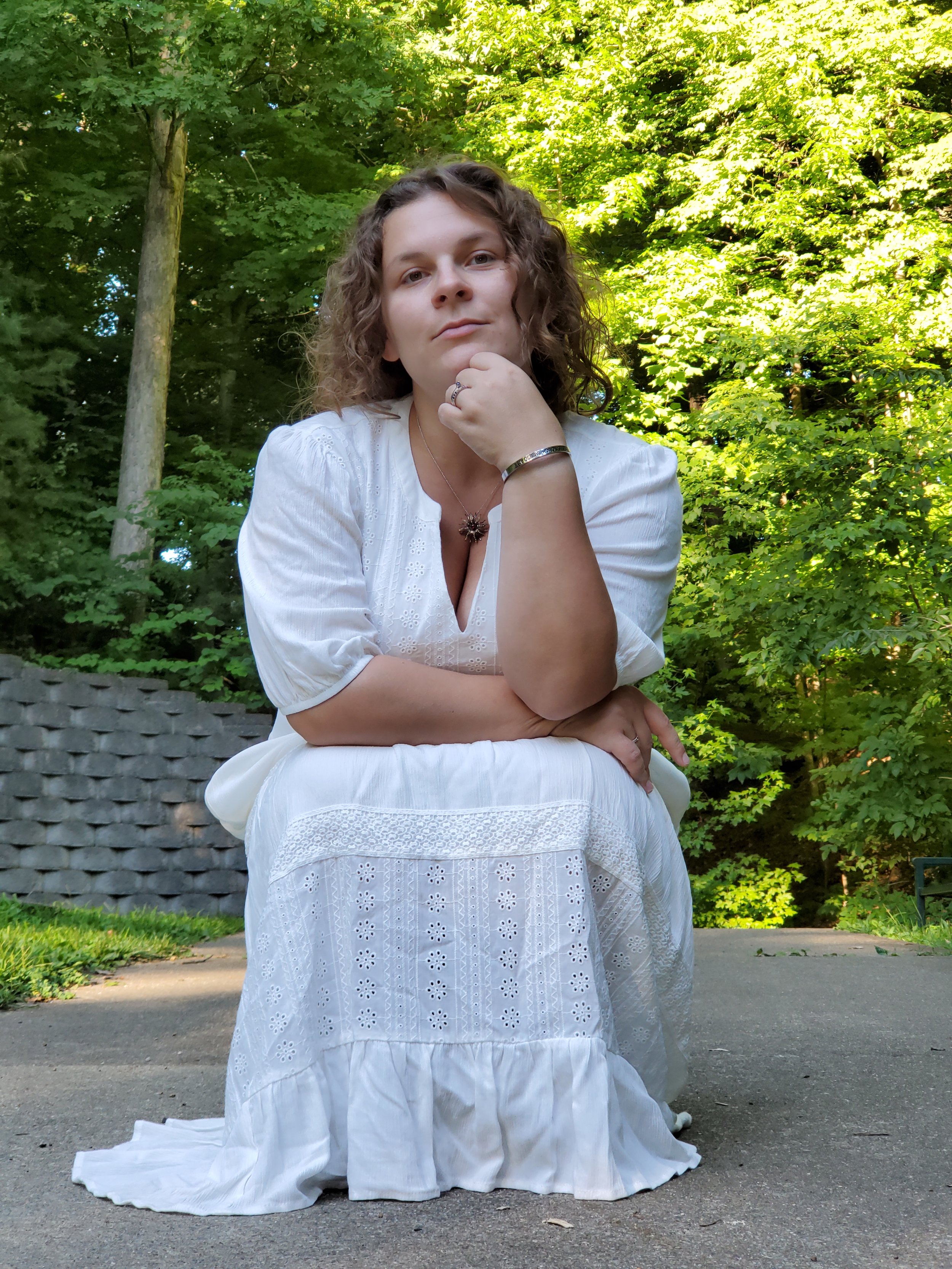
In a word, I suppose I could be described as “daring.” But it’s taken me a long time to feel like I could find comfort in that term.
I’m somebody who has spent my life some place between the margins and the spotlight, always finding a way to survive while simultaneously seeking a way to thrive—and to define what thriving means to me.
In 1999, at age three, I was diagnosed with leukemia; in 2001, I completed chemotherapy and have remained in remission since. During those two years, I was the face of numerous campaigns for the American Red Cross, the Leukemia & Lymphoma Society, and Light the Night Walks. More than two dozen Team-in-Training runners completed marathons in my honor, raising funds for childhood cancer research. Like I said, I found my way into the spotlight.
The rest of my childhood wasn’t so glamorous. My parents are both products of generational trauma, and their parenting of me reflects their wounds. Let me be clear now: I do not begrudge them for their failings. I do, however, carry scars of my own from their choices—many of which were made from their unhealed, individual traumas—and I refuse to pretend like their choices didn’t affect me in myriad ways. From my parents’ divorce in 2004 to my father’s abandonment of me in 2007, to my mother’s struggles throughout my teen years and family of origin’s preference for fair weather relationships over facing some necessary storms of life, I entered my twenties feeling as though I’d already lived an entire lifetime.
In 2016, I married my college sweetheart. Several months later, during my senior year, we were greeted with a surprise pregnancy that was quickly rife with complications, and I had to press pause on my studies for health reasons. Our son was born in 2017, then in 2019, we welcomed our youngest, a daughter. Later that year, I started working from home, and before long, I’d stumbled upon a career that would change my life.
Voicing My Story
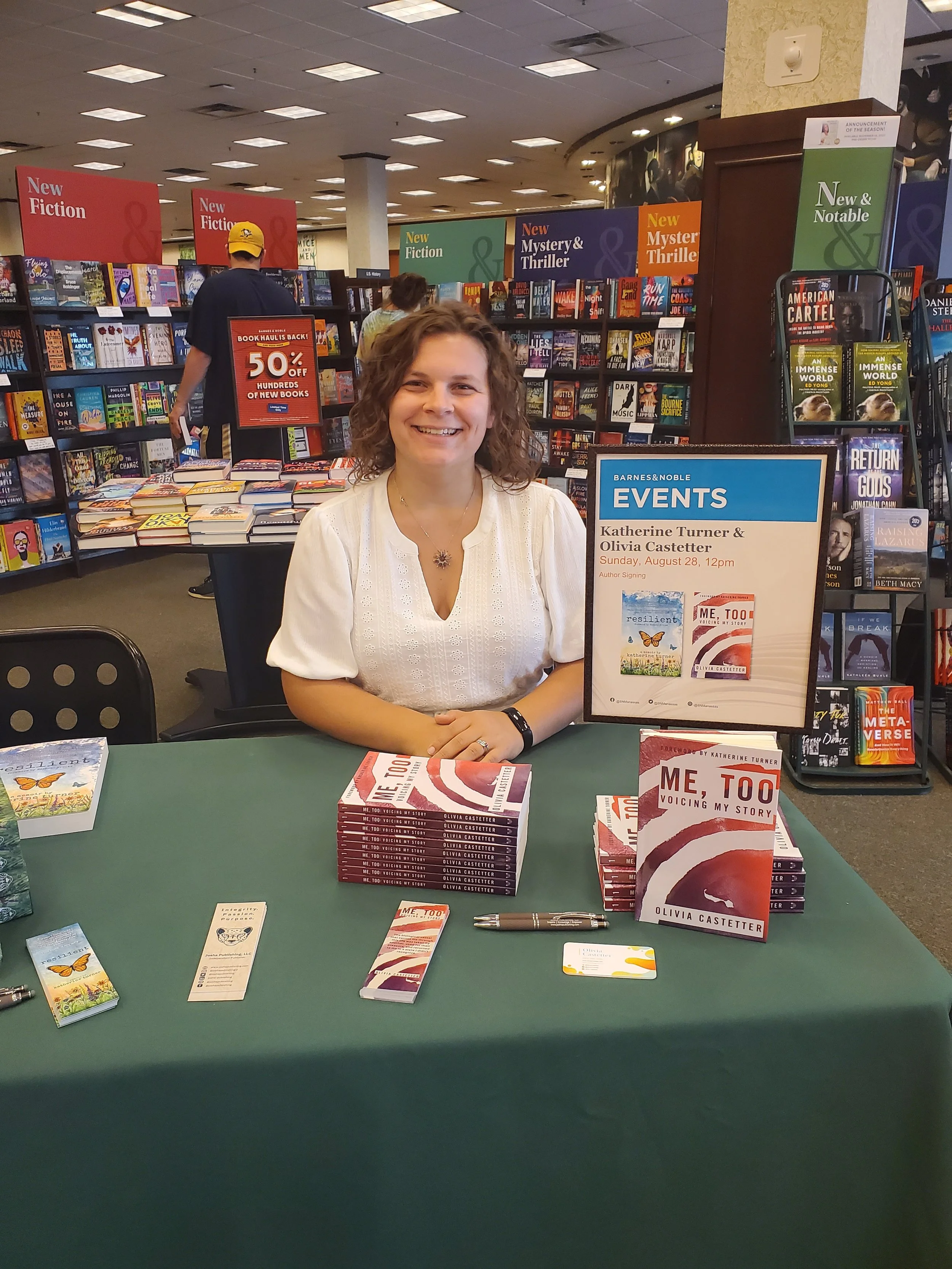
In 2019, I began a freelance career as a manuscript editor, focusing on memoirs of trauma and healing as well as novels of similar themes. One of my clients, Katherine Turner, sent me a manuscript for her first nonfiction work, moments of extraordinary courage. As I was editing her chapter titled #metoo, I realized that, despite numerous instances of sexual violence in my life, I’d never actually said “Me, too.” Not on Twitter in 2017. Not privately to myself. Not even in therapy. Sure, I’d described events wherein my autonomy was disregarded and my lack of consent was ignored, but I’d never claimed the identity of a survivor.
Before I even realized what was happening, I’d found a notebook and a pen—I remember the color of the dark green ink vividly—and had written six pages, detailing a half dozen instances of sexual assault, harassment, and rape from the first twenty years of my life. Then, I scanned those pages and emailed them to Katherine.
Those pages eventually became my first book: Me, Too: Voicing My Story, published in January of 2022.
Throughout the drafting process, I realized that by naming what I’d survived and accepting that none of it was my fault, I noticed several fault lines in the way women are treated in the present day. We’re told to dress modestly, then are shamed for being prudish, but if we, as preteens, show our shoulders at school, we’re told we’re being distracting. We’re told to make men happy, but if making a man happy oversteps our personal comfort, then we’re called a tease, and if we take it a step further, we’re slut-shamed. If we have children, we’re supposed to give up our ambition, and if we remain childless by choice, we’re called unwomanly. And on it goes, as patriarchal beliefs attempt to remove any choice, any autonomy, any personal agency from us at all until we believe that consent is no more than an illusion.
And I knew it wasn’t just me that had experienced the cultural ping pong of never being enough, all the while battling being too much, so I decided to keep reading, writing, and researching.
My current essays on sexual violence, voice, and life after trauma are featured on my Substack, Unmute: On Voice, Trauma, & Survival.
The Journey to Here
In 2020, shortly after my daughter’s first birthday, I began intensive art therapy to process events from my childhood and young adulthood—generational trauma, yes, but also multiple experiences of sexual violence and other traumas. I realized that as fundamentally as I believed my daughter deserves to grow up knowing a personal empowerment I could’ve only ever dreamed of when I was younger, it wasn’t too late for me to embrace my surety, either.
Gradually, I began exploring other forms of writing and reconnecting with hobbies I’d long-ago shelved, including local history research, cemetery walks, and gardening. Then, in 2023, I applied to return to college, changing my major from psychology—which I only needed to pass statistics and a senior seminar to finish that degree—to history, adding two years’ worth of courses to my studies. I enrolled in my first course then in October of 2024, and in December of 2025, I graduated, having completed a historic preservation fellowship and a museum internship.
I hold a Bachelor of Arts from Indiana University in history, and my undergraduate research primarily focused on the children of the Civil Rights Movement and women’s experiences in war. My education taught me how to apply rigorous methodologies to my research process, while my experience in the publishing industry since 2019 has honed my ability to present my findings in an approachable manner that leads with my desire to connect with my audience first and to inform second.
I also hold a certificate in Feminism and Social Justice from the University of California Santa Cruz and am currently completing another program through Stanford University focused on Women’s Global Health.
I remain dedicated to Black History scholarship as well as twentieth-century global affairs (especially World War II and the history of American-Vietnamese relations). Since 2022, I have been researching a historical event from my hometown of New Albany, Indiana, regarding a 1905 murder-suicide. All of these endeavors, and more, appear on my history-focused Substack, History & Her Story.
In addition to my history-based endeavors, I continue to research and voice my story and thoughts about sexual violence survivorship on a separate Substack, Unmute, where I write about power, narrative, and the politics of who gets believed. Unmute is where I bring my decade of survivor work together with my training as a historian.

Staying Connected
Shortly after Me, Too: Voicing My Story was released, I began speaking at women’s retreats about trauma, healing, and how writing can help. I’ve led workshops to help trauma survivors utilize types of therapeutic journaling—whether intended to support writing a memoir or to begin healing work—and spoken to groups of women about the cathartic process of sharing one’s story. I also speak virtually at some retreats and occasionally host virtual workshops independently. In addition, I offer memoir coaching to aspiring authors.
I embrace a casual style of speaking in these spaces, and prefer to speak to smaller audiences in a more intimate setting. I’ve attended numerous retreats where, from the audience, I was star-struck by the person onstage—someone who had already done the thing I was dreaming of. If it’s in my power, I never want someone who comes to see me feel that way.
Because the truth is, we all start from a place that sounds a whole lot like “Okay, but how do I get there?” or “What do I need to do to begin?” If you’d asked me when I was twenty what I’d say to this being my life by thirty, my body would’ve flooded with a sense of apprehension and hope, terrifying me that I could ever be someone giving advice on healing or publishing a book. Like I tell my audiences, it wasn’t easy getting to this point. Because healing isn’t linear. It’s messy work that, sometimes, causes an ache within us and can accidentally hurt those we love, too. That no amount of therapy can completely help if we don’t have a safe person or community to live a healed-and-healing life alongside. To know and experience joyful life with, whether they’re a friend or partner, a sibling or neighbor.
My message is straightforward: Healing isn’t running away; it’s developing self-love, and it’s finding love you can safely walk alongside and embrace (and that’s why I have so many dogs…kidding! Sort of…). For me, and for many like me, healing begins with telling your story, whether that’s in a journal just for you, or with the intention of sharing with others someday. Telling your story, naming your experiences for what they were and how they made you feel—not how others told you that you should feel—is the very first step.
My continued involvement in women’s groups is one of the most important aspects of my work. I believe that there are often surprising nuggets of healing, understanding, and inner peace that can be found when you connect with a community. I am grateful for opportunities to facilitate that for others and cherish the lifelong friends I’ve made in these spaces.
To learn more about my speaking offerings, click here.
A Day in the Life
I reside in the Louisville Metropolitan area with my husband, Nick, and our two children, as well as an ever-evolving mix of rescue animals. As you might imagine from that sentence alone, each day is a little bit different.
But I wouldn’t have the beautiful chaos that has become my life without learning to take a chance.
A chance to heal. A chance to learn. A chance to build something that is all mine, breaking away from how I was raised and what was expected of me to embrace what feels right.
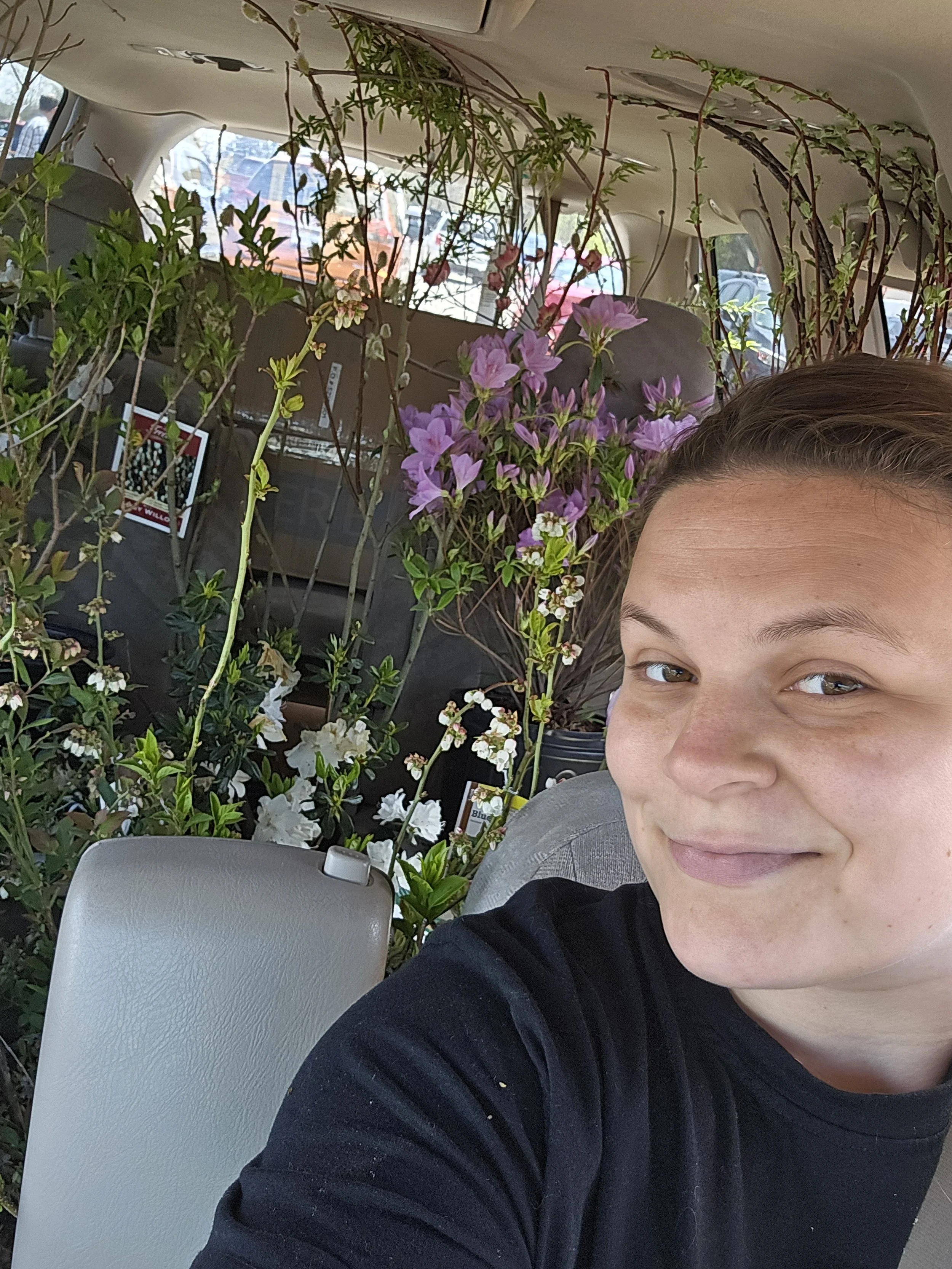
Most days, I wake up before the sunrise and help get Nick and the kids out the door to work and school. Then, I work from home, writing or researching in between rounds of laundry and stirring whatever I’m slowly simmering on the stove for that night’s dinner. My afternoons are full of car line pick-ups, swim lessons, karate, music lessons, and walking our dogs. I spend my free time crocheting, hiking, meditating near water, gardening, and developing new healthy recipes.
In many ways, my daily life looks a lot like a 1950s housewife’s, but my education has taught me that I have many opportunities my ancestors did not—and my feminist stance reminds me that the opportunity to pursue a lifestyle I want is one of the grandest privileges I could ever have. And it’s only possible because of previous generations of women, like me, who learned to be daring.
To connect with me on social media, click here.